Orelly: A Romantic Script Font for Editorial Design
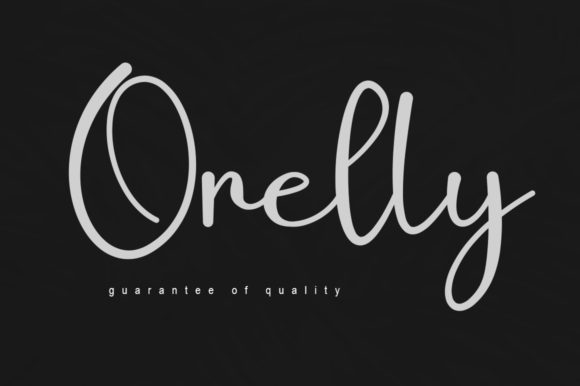
As a publisher and editorial designer who crafts digital magazines, seasonal newsletters, and illustrated ebooks, I’ve learned that typography isn’t just about legibility—it’s about voice. Orelly is a romantic and modern script font with a strong poetic feel. The characters flow beautifully into each other and create an authentic look, perfect for your projects that need a personal note. As a Script Handwritten typeface, Orelly delivers warmth and intentionality where sterile sans serifs fall short—especially in contexts where emotional resonance matters more than neutrality.
Orelly for Magazine Covers and Print-First Editorial Identity
When your quarterly literary magazine or indie lifestyle publication lands on a coffee table—or appears as a thumbnail in a digital newsstand—the cover must whisper before it speaks. Orelly excels here as a display font that balances elegance with approachability. Its rhythmic letterforms and subtle connective strokes suggest handwritten intimacy without sacrificing polish. Use Orelly for masthead treatment, subtitle accents, or even limited-cover taglines (e.g., “Spring 2024 • Letters from the Coast”). Because Orelly is a Script Handwritten font built for visual impact—not extended reading—it pairs naturally with a refined serif font like Adobe Garamond or a crisp sans serif like Inter for body copy and captions. For print workflows, test how Orelly renders at 18–36 pt in CMYK PDF exports; its open counters and consistent stroke modulation hold up well on coated stock.
Orelly for Ebook Titles and Chapter Openers in Digital Publications
Ebooks demand typography that bridges screen readability and atmospheric cohesion—and Orelly fits precisely in that intersection. As a Fonts choice for ebook titles and chapter headings, Orelly adds narrative texture without compromising accessibility. Its gentle slope and organic spacing evoke journaling, poetry collections, or memoirs—ideal for creators publishing guided journals, coaching workbooks, or seasonal recipe ebooks. In EPUB and fixed-layout MOBI files, use Orelly sparingly: apply it only to front matter titles, section dividers, and pull-quote headers. Avoid full-body usage—Orelly is not designed for long-form screen reading, but its presence in key structural moments strengthens reader immersion and signals tonal consistency across chapters.
Orelly for Newsletter Headers and Subscriber Engagement Graphics
Your newsletter isn’t just content—it’s a relationship. And Orelly helps deepen that connection through intentional, human-scaled typography. As a Script Handwritten font, Orelly works exceptionally well in email header banners, featured quote graphics, and “welcome” illustrations embedded in Mailchimp or ConvertKit templates. Try setting “You’re invited to slow down” or “A note before the list” in Orelly, then pair it with a clean, low-contrast sans serif (like Poppins or Manrope) for bullet points and CTAs. This contrast honors Orelly’s personality while preserving scannability—a balance critical for inbox engagement. Bonus: because Orelly includes standard ligatures and stylistic alternates, you can subtly vary “ff”, “fi”, and “fl” combinations to avoid repetition in repeated newsletter headers.
Orelly for Printable Guides, Lead Magnets, and Creative Branding Assets
If you offer downloadable worksheets, habit trackers, or seasonal planning kits, Orelly elevates perceived value instantly. As a Fonts asset in printable PDFs, Orelly conveys care and craftsmanship—especially when used for title pages, section labels (“Week One Reflections”), or decorative borders. Its romantic and modern script font character grounds the design in authenticity, helping your audience feel seen rather than sold to. For branding continuity, consider using Orelly across your lead magnet suite, course workbook covers, and even branded Notion templates—just ensure your commercial license covers redistribution. Most premium Script Handwritten fonts like Orelly include full OTF/TTF files with multilingual support (Latin-based languages), making them safe for global audiences and bilingual guides.
Orelly for Quote Graphics and Social Media Story Highlights
Quote-driven content thrives on tone—and Orelly gives poetic lines, affirmations, or excerpted wisdom their due gravity. As a Script Handwritten font, Orelly avoids the performative quirkiness of many decorative scripts. Instead, its strong poetic feel lends sincerity to phrases like “Breathe first. Decide after.” or “Your voice matters—even when it shakes.” Use Orelly at 28–42 pt over muted backgrounds in Canva or Figma, and layer it with soft shadows or paper-texture overlays to enhance tactility. For Instagram Story highlights, limit Orelly to one line per frame and align left or center—its natural rhythm supports intuitive reading even at small scale. Pair with a neutral sans serif for attribution lines (“—Maggie Lee, The Still Journal”) to maintain hierarchy and clarity.
Orelly for Wedding Guides, Lifestyle Blogs, and Niche Content Branding
Niche publishers—from wedding planners offering digital vow workbooks to herbalists launching seasonal zines—rely on typography to signal alignment with audience values. Orelly is a romantic and modern script font with a strong poetic feel, making it ideal for brands centered on intention, craft, and quiet celebration. On a lifestyle blog, use Orelly for post titles (“How to Set a Table That Feels Like Home”) and sidebar callouts (“This week’s ritual”). In a wedding guide PDF, apply Orelly to ceremony timeline headers, vow-writing prompts, and envelope addressing examples. Its authentic look reinforces trust: readers sense that the creator didn’t grab the first free script font, but chose deliberately—just as they’re choosing to invest time, attention, and often money, in your work.
Orelly Font Pairing Strategies for Editorial Layouts
A great Script Handwritten font like Orelly shines brightest when anchored by thoughtful companions. For editorial layouts, pair Orelly with a highly readable serif (e.g., Literata or PT Serif) for long-form articles, or a warm, humanist sans serif (e.g., Lato or Karla) for captions, navigation menus, and metadata. Avoid pairing with other scripts or overly geometric fonts—Orelly’s lyrical flow needs breathing room. If your project includes multilingual text, verify that your chosen companion font supports diacritics and extended Latin characters. And always test Orelly in real contexts: preview newsletter headers on iOS Mail, check ebook title rendering in Apple Books, and print a sample page of your planner to assess ink spread and contrast.